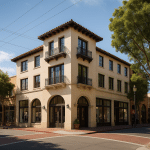
As California’s broader commercial real estate market moves into a period of stabilization, the Central Coast stands out as a uniquely resilient and localized market heading into 2026. Defined by limited land availability, strict zoning, tourism-driven demand, and a strong small-business economy, the region’s CRE trends are less about rapid expansion and more about strategic adaptation.
1. Limited Supply Continues to Protect Asset Values
Unlike major metros, the Central Coast benefits from natural and regulatory barriers that severely limit new commercial development. Coastal zoning restrictions, environmental regulations, and community resistance to overdevelopment mean that supply remains constrained across retail, industrial, and office sectors. In 2026, this scarcity continues to support occupancy and pricing for well-located assets—even amid broader economic uncertainty.
2. Repositioning Beats Ground-Up Development
High construction costs and entitlement challenges are pushing owners toward adaptive reuse and repositioning rather than new builds. Older retail centers, light industrial buildings, and legacy office assets are being upgraded with modern finishes, flexible layouts, and energy-efficient systems. Mixed-use concepts—combining retail, office, and residential elements—are particularly attractive in walkable downtown cores like San Luis Obispo, Santa Barbara, and Ventura.
3. Experiential Retail and Local Services Lead Leasing Activity
Retail on the Central Coast continues to outperform national averages, largely due to tourism and lifestyle-driven demand. In 2026, successful retail assets are those focused on experiential tenants—restaurants, wine tasting rooms, fitness, wellness, medical services, and specialty retail. National chains remain selective, while local and regional operators drive much of the absorption, reinforcing the importance of flexible lease structures and tenant improvement incentives.
4. Small-Bay Industrial Remains a Core Strength
Industrial real estate remains one of the strongest sectors across the Central Coast, particularly small-bay and light industrial spaces serving trades, food and beverage, wine/agriculture support, and last-mile distribution. While some new supply is coming online, demand continues to favor functional layouts, yard access, and proximity to Highway 101. In 2026, tenants gain modest negotiating leverage, but vacancy remains historically tight by California standards.
5. Office Market Stabilizes Around “Right-Sized” Space
The office sector continues its slow reset, but the Central Coast avoids the extreme vacancy challenges seen in larger urban markets. In 2026, demand centers on smaller, high-quality office suites for professional services, medical users, and hybrid workforces. Buildings with strong parking ratios, natural light, outdoor access, and upgraded HVAC systems outperform older stock. New office construction remains minimal, supporting long-term stabilization.
6. Energy Efficiency and Compliance Drive Capital Planning
California’s evolving energy and building standards are increasingly shaping CRE strategy. On the Central Coast, owners are prioritizing HVAC upgrades, solar installations, water efficiency, and smart building systems to remain competitive and compliant. Properties that proactively address these requirements are better positioned for leasing and refinancing in 2026 and beyond.
7. Debt Maturities Create Selective Buying Opportunities
A wave of loan maturities in 2026 is expected to bring more assets to market, particularly from owners facing refinancing challenges. For well-capitalized buyers, this creates opportunities to acquire quality Central Coast assets at adjusted pricing—especially those requiring operational or physical upgrades.
Bottom Line:
In 2026, Central Coast commercial real estate rewards patience, local knowledge, and asset-level execution. Markets favor owners and investors who understand tourism dynamics, small-business demand, regulatory constraints, and the long-term value of well-located, flexible properties in one of California’s most supply-constrained regions.
If you are exploring opportunities in the Central Coast consider the team at Gen3!